본문 바로가기
건강

갱년기인 줄 알았는데… 의외의 질환일 수도 있는 증상 7가지!

by 하늘별 2026. 7. 23.


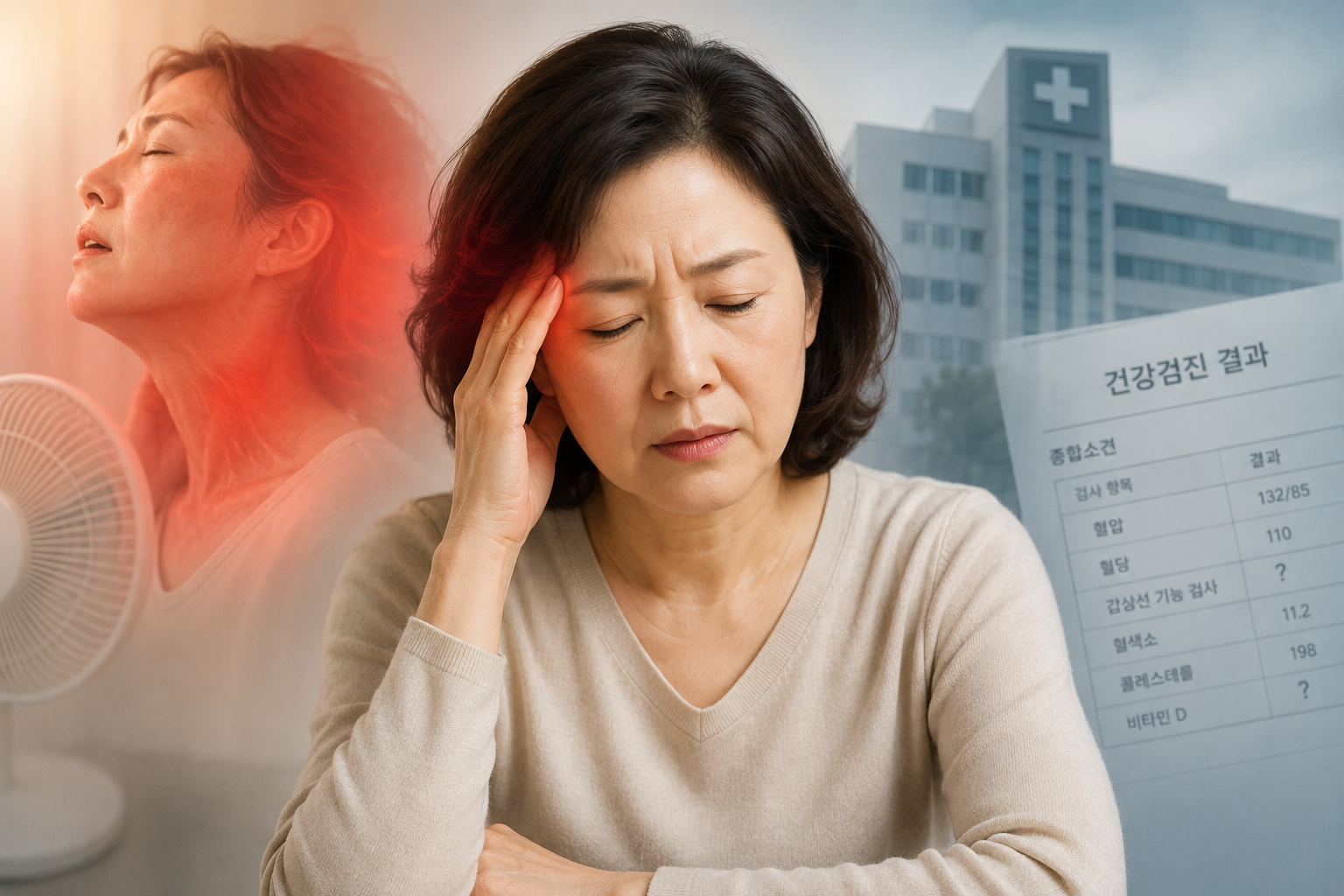
"요즘 자꾸 피곤하고 밤에 잠도 잘 오지 않아요."


"얼굴이 화끈거리고 이유 없이 짜증이 나는데 갱년기겠죠?"


40~60대 여성이라면 한 번쯤 이런 생각을 해보셨을 것입니다. 실제로 갱년기는 여성이라면 누구나 겪을 수 있는 자연스러운 과정입니다.


하지만 모든 증상을 단순히 갱년기로만 생각하고 넘겨서는 안 됩니다.


피로감, 불면증, 두근거림, 식은땀, 우울감처럼 갱년기에서 흔히 나타나는 증상은 다른 질환에서도 비슷하게 나타날 수 있기 때문입니다.


특히 증상이 오래 지속되거나 점점 심해진다면 정확한 원인을 확인하는 것이 중요합니다.


오늘은 갱년기로 착각하기 쉬운 대표적인 질환 7가지를 알아보겠습니다.
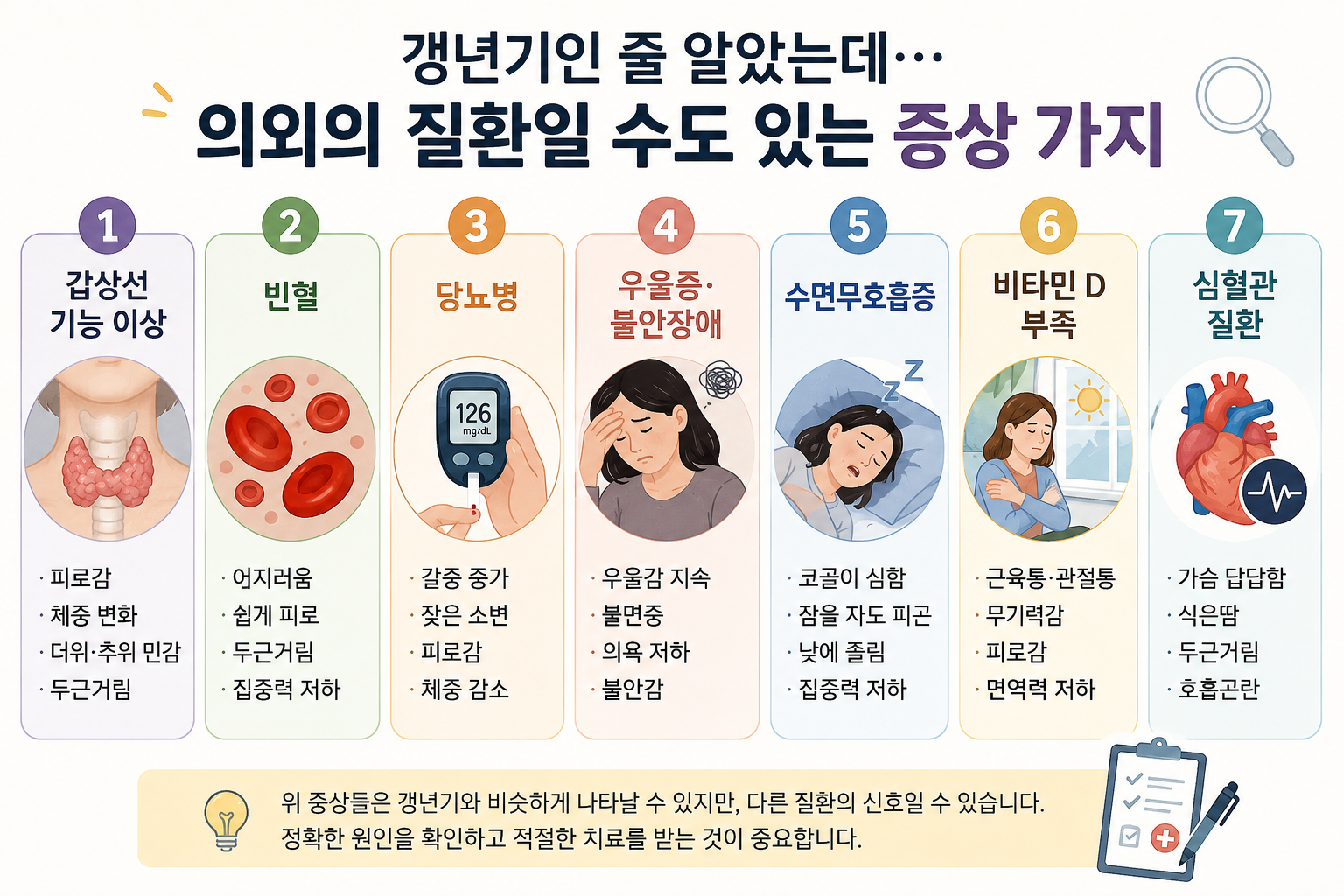
1. 갑상선 기능 이상

갑상선은 우리 몸의 신진대사를 조절하는 중요한 기관입니다.


갑상선 기능이 저하되거나 항진되면 피로감, 체중 변화, 더위나 추위에 민감해지는 증상, 심장이 두근거리는 증상이 나타날 수 있습니다.


이러한 증상은 갱년기와 매우 비슷해 초기에 혼동하는 경우가 많습니다.


특히 이유 없이 체중이 급격히 늘거나 줄었다면 갑상선 검사를 받아보는 것이 좋습니다.

2. 빈혈

조금만 움직여도 숨이 차고 쉽게 피곤하다면 빈혈일 수도 있습니다.


빈혈은 산소를 운반하는 적혈구가 부족한 상태로 어지럼증, 두근거림, 집중력 저하까지 동반할 수 있습니다.


갱년기 여성에게도 흔하게 나타날 수 있기 때문에 혈액검사를 통해 쉽게 확인할 수 있습니다.

 

3. 당뇨병

당뇨병 초기에는 특별한 증상이 없다고 생각하기 쉽지만


피곤함, 잦은 갈증, 소변 횟수 증가, 체중 감소 등이 나타날 수 있습니다.


이러한 증상을 단순한 갱년기로 넘기면 치료 시기를 놓칠 수도 있습니다.


특히 건강검진에서 공복혈당이 높게 나왔다면 더욱 주의해야 합니다.

4. 우울증과 불안장애

갱년기에는 여성호르몬 변화로 감정 기복이 생길 수 있습니다.


하지만 우울감이 몇 달 이상 지속되거나 아무 일에도 의욕이 생기지 않고 불안감이 심하다면 정신건강의학과 상담이 도움이 될 수 있습니다.


잠을 자도 개운하지 않고 일상생활이 힘들 정도라면 단순한 갱년기 증상으로만 생각해서는 안 됩니다.
 

5. 수면무호흡증

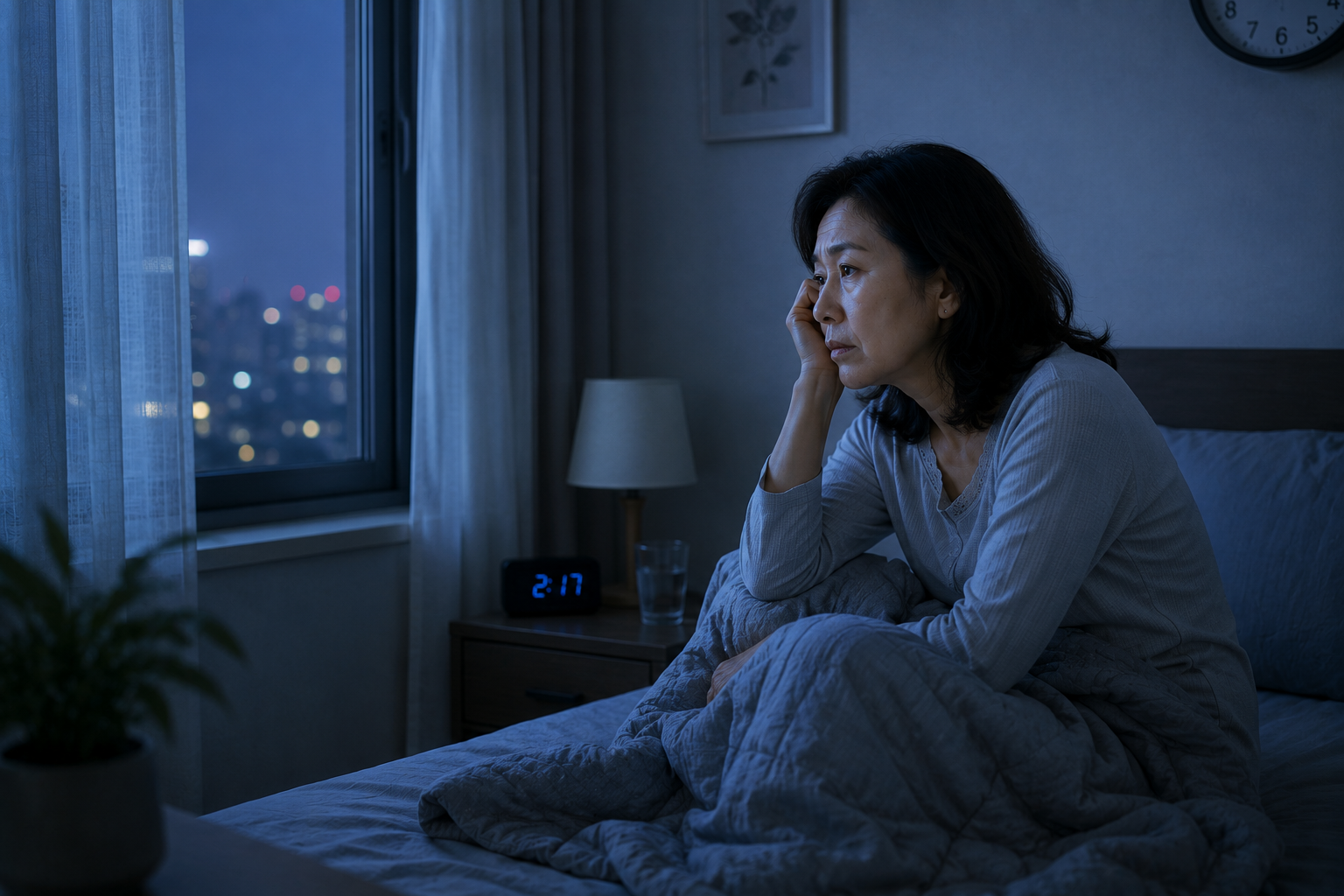
밤새 충분히 잤는데도 계속 졸리고 피곤하다면 수면무호흡증을 의심해볼 수 있습니다.


코골이가 심하거나 자는 동안 숨이 멈춘다는 이야기를 들었다면 더욱 그렇습니다.


수면의 질이 떨어지면 기억력 저하와 집중력 감소까지 나타날 수 있어 갱년기와 혼동하기 쉽습니다.

6. 비타민 D 부족

비타민 D가 부족하면 근육통, 관절통, 무기력감, 피로감이 나타날 수 있습니다.


특히 실내 생활이 많거나 햇빛을 충분히 쬐지 않는 경우 흔하게 발견됩니다.


간단한 혈액검사로 확인할 수 있으며 필요하면 보충제를 처방받을 수 있습니다.

7. 심혈관 질환

가슴이 답답하거나 식은땀이 나고 숨이 차는 증상은 갱년기에서도 나타날 수 있습니다.


하지만 심장질환의 초기 신호일 가능성도 있기 때문에 절대 방심해서는 안 됩니다.


특히 가슴 통증이 지속되거나 왼쪽 팔이나 턱까지 통증이 퍼진다면 즉시 병원을 찾아야 합니다.

이런 증상이 있다면 꼭 병원을 방문하세요
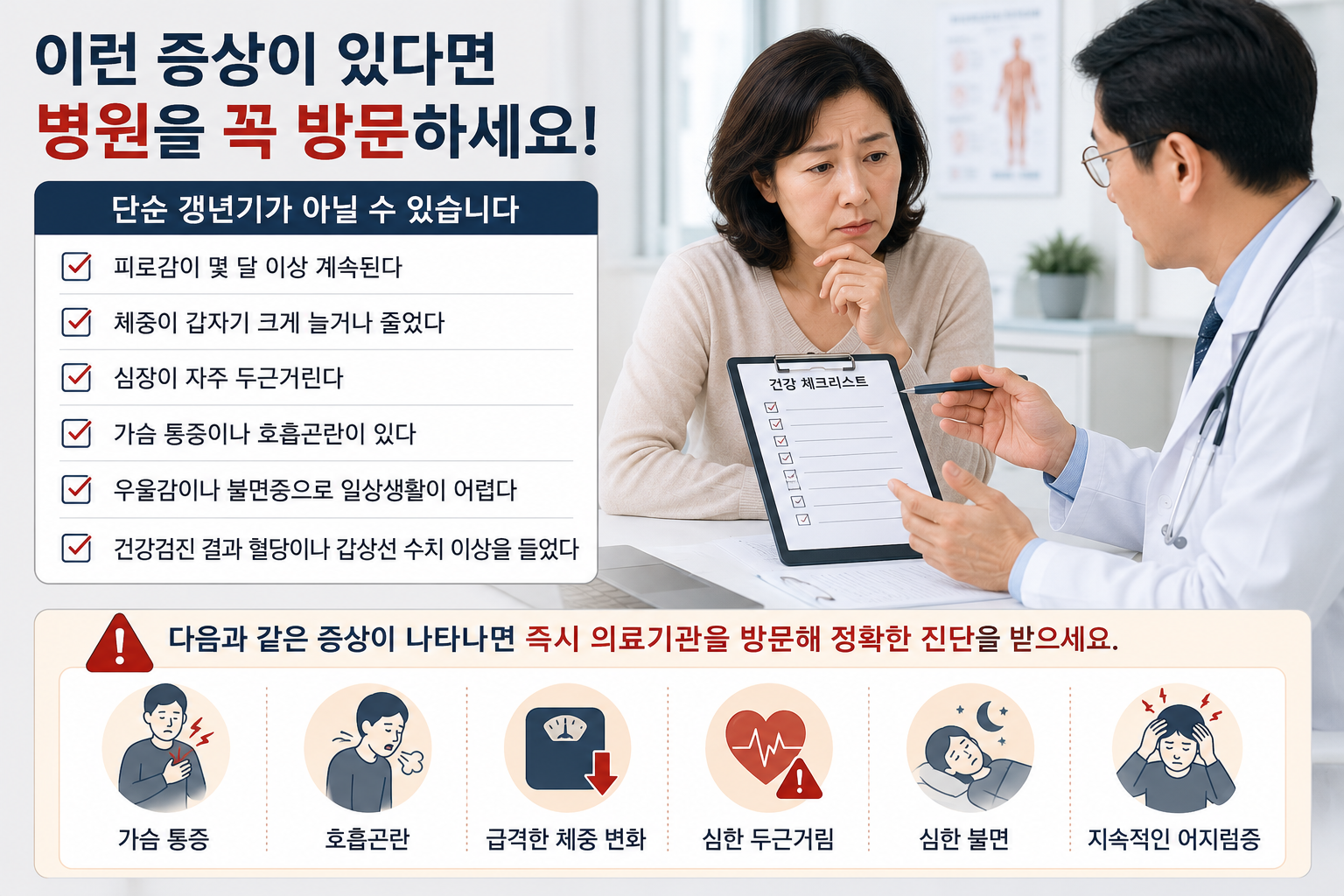
 

다음과 같은 경우에는 단순히 갱년기라고 넘기지 말고 진료를 받는 것이 좋습니다.

  • 피로감이 몇 달 이상 계속된다.
  • 체중이 갑자기 크게 늘거나 줄었다.
  • 심장이 자주 두근거린다.
  • 가슴 통증이나 호흡곤란이 있다.
  • 우울감이나 불면증으로 일상생활이 어렵다.
  • 건강검진 결과 혈당이나 갑상선 수치 이상을 들었다.

마무리


갱년기는 누구에게나 찾아올 수 있는 자연스러운 변화입니다.


하지만 모든 증상을 갱년기 탓으로만 돌리면 치료가 필요한 질환을 놓칠 수도 있습니다.


증상이 오래 지속되거나 평소와 다르다고 느껴진다면 스스로 판단하기보다 병원에서 정확한 진단을 받는 것이 가장 중요합니다.


몸이 보내는 작은 신호를 가볍게 넘기지 않는 것이 건강을 지키는 첫걸음입니다.


함께 보면 좋은 글

건강검진에서-혈압·혈당·콜레스테롤이-높다면-대사증후군-증상과-관리법


건강검진에서 혈압·혈당·콜레스테롤이 높다면? 대사증후군 증상과 관리법

건강검진을 받고 나면 혈압, 공복혈당, 중성지방, 콜레스테롤 수치를 확인하게 됩니다. 그런데 각각의 수치가 조금씩 높아도 당장 특별한 증상이 없으면 대수롭지 않게 넘기는 사람이 많습니다.

myview90733.com

지방간-증상-7가지-피곤함이-계속된다면-꼭-확인하세요-방치하면-위험합니다


지방간 증상 7가지, 피곤함이 계속된다면 꼭 확인하세요. 방치하면 위험합니다

건강검진에서 "지방간이 있습니다."라는 말을 들었지만 특별한 증상이 없어 대수롭지 않게 넘기는 사람들이 많습니다. 실제로 지방간은 초기에는 뚜렷한 증상이 거의 없어 '침묵의 질환'이라고

myview90733.com


Could It Be More Than Menopause? 7 Symptoms That May Actually Point to Another Health Condition


"I've been feeling exhausted lately."


"I can't sleep well, and I keep having hot flashes. It must be menopause, right?"


Many women in their 40s, 50s, and even early 60s naturally assume that new physical or emotional changes are simply part of menopause. While menopause is a normal stage of life, not every symptom should automatically be blamed on hormonal changes.


Fatigue, insomnia, heart palpitations, night sweats, mood swings, and muscle pain are common during menopause—but they can also be warning signs of other medical conditions that require proper diagnosis and treatment.


If these symptoms persist or gradually become worse, it's important not to ignore them.


Here are seven health conditions that are often mistaken for menopause.

1. Thyroid Disorders

The thyroid gland regulates your body's metabolism. When it becomes underactive (hypothyroidism) or overactive (hyperthyroidism), symptoms can closely resemble menopause.


Common symptoms include:

  • Persistent fatigue
  • Weight gain or weight loss
  • Sensitivity to heat or cold
  • Heart palpitations
  • Mood changes

If you notice unexplained weight changes along with fatigue, a thyroid function test may be necessary.

2. Anemia

Feeling tired all the time isn't always caused by menopause.


Anemia occurs when your body doesn't have enough healthy red blood cells to carry oxygen efficiently.


Symptoms include:

  • Constant fatigue
  • Dizziness
  • Shortness of breath
  • Rapid heartbeat
  • Difficulty concentrating

A simple blood test can usually confirm whether anemia is the cause.

3. Diabetes

Early diabetes often develops quietly.


Many people don't realize they have it until symptoms become more noticeable.


Possible signs include:

  • Increased thirst
  • Frequent urination
  • Constant fatigue
  • Unexplained weight loss
  • Blurred vision

These symptoms may easily be confused with menopause, especially in middle age.

4. Depression and Anxiety Disorders

Hormonal changes during menopause can certainly affect mood.


However, persistent depression or anxiety should never be dismissed as "just menopause."


Warning signs include:

  • Ongoing sadness
  • Loss of motivation
  • Severe anxiety
  • Insomnia
  • Difficulty enjoying daily life

If these symptoms last for several weeks or months, professional evaluation is recommended.

5. Sleep Apnea

Do you wake up feeling exhausted even after a full night's sleep?


Sleep apnea may be the reason.


Common symptoms include:

  • Loud snoring
  • Pauses in breathing during sleep
  • Morning headaches
  • Daytime sleepiness
  • Poor concentration

Many people mistake these symptoms for menopause-related fatigue.

6. Vitamin D Deficiency

Low vitamin D levels are surprisingly common, especially among people who spend most of their time indoors.


Symptoms may include:

  • Muscle aches
  • Joint pain
  • Weakness
  • Fatigue
  • Low energy

A blood test can determine whether supplementation is needed.

7. Heart Disease

Chest discomfort, sweating, and heart palpitations are sometimes blamed on menopause.


However, they can also be early warning signs of cardiovascular disease.


Seek medical attention immediately if you experience:

  • Chest pain
  • Shortness of breath
  • Pain spreading to the left arm, jaw, or back
  • Cold sweats
  • Severe dizziness

Never ignore these symptoms.

When Should You See a Doctor?

You should schedule a medical evaluation if:

  • Fatigue lasts for several months.
  • Your weight changes significantly without explanation.
  • You frequently experience heart palpitations.
  • You have chest pain or difficulty breathing.
  • Depression or insomnia interferes with daily life.
  • A recent health screening showed abnormal blood sugar or thyroid results.

Early diagnosis often leads to more effective treatment.

Final Thoughts

Menopause is a natural part of aging, but not every new symptom is caused by menopause alone.


Many medical conditions share similar symptoms, making it easy to overlook illnesses that require treatment.


Listening to your body and seeking professional medical advice when symptoms persist is one of the best ways to protect your long-term health.


Sometimes, what seems like menopause may actually be your body asking for a closer look.