
건강검진을 받고 나면 혈압, 공복혈당, 중성지방, 콜레스테롤 수치를 확인하게 됩니다. 그런데 각각의 수치가 조금씩 높아도 당장 특별한 증상이 없으면 대수롭지 않게 넘기는 사람이 많습니다.
하지만 복부비만과 함께 혈압, 혈당, 중성지방, 콜레스테롤 수치에 문제가 생기기 시작했다면 단순히 살이 조금 찐 상태가 아니라 대사증후군을 의심해 볼 필요가 있습니다.
대사증후군은 고혈압, 당뇨병, 이상지질혈증과 같은 여러 성인병이 발생하기 쉬운 위험요인이 한 사람에게 동시에 나타나는 상태입니다. 지금 당장 통증이 없더라도 방치하면 심근경색, 뇌졸중, 당뇨병과 같은 질환으로 이어질 수 있어 건강검진 결과를 꼼꼼하게 살펴야 합니다.
대사증후군이란?
대사증후군은 하나의 특정 질병을 의미하는 것이 아닙니다. 복부비만, 높은 혈압, 높은 공복혈당, 높은 중성지방, 낮은 HDL 콜레스테롤처럼 서로 연관된 여러 위험요인이 함께 나타난 상태를 말합니다.
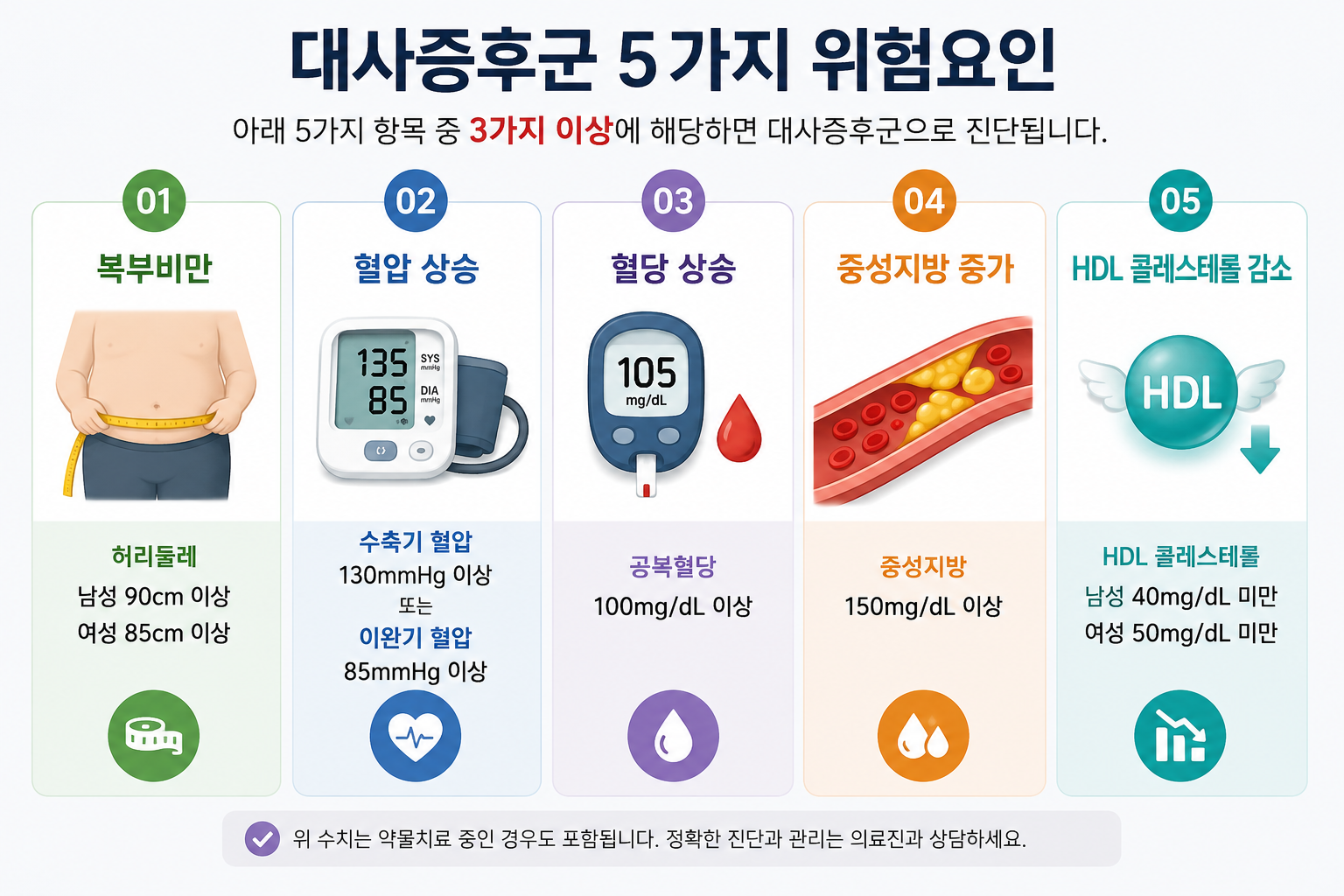
국민건강보험공단에서는 다음 5가지 위험요인 가운데 3가지 이상에 해당하면 대사증후군으로 판단합니다.
- 남성 허리둘레 90cm 이상, 여성 허리둘레 85cm 이상
- 수축기 혈압 130mmHg 이상 또는 이완기 혈압 85mmHg 이상
- 공복혈당 100mg/dL 이상
- 중성지방 150mg/dL 이상
- HDL 콜레스테롤이 남성 40mg/dL 미만, 여성 50mg/dL 미만
이미 고혈압약, 혈당강하제 또는 이상지질혈증 치료제를 복용하고 있다면 실제 검사 수치가 기준보다 낮게 나오더라도 관련 위험요인이 있는 것으로 볼 수 있으므로 담당 의사와 상담해야 합니다.
대사증후군은 왜 생길까?
대사증후군의 중심에는 흔히 복부 내장지방과 인슐린 저항성이 있습니다.
내장지방이 늘어나면 우리 몸이 인슐린에 제대로 반응하지 못하는 인슐린 저항성이 생기기 쉽습니다. 인슐린은 혈액 속 포도당을 세포 안으로 이동시켜 에너지로 사용하도록 돕는 호르몬입니다.
인슐린이 제대로 작용하지 않으면 혈당이 높아지고, 이를 낮추기 위해 췌장은 더 많은 인슐린을 분비합니다. 이 상태가 장기간 이어지면 공복혈당과 중성지방이 상승하고 혈압과 콜레스테롤에도 문제가 생길 수 있습니다.
다음과 같은 생활습관은 대사증후군 위험을 높일 수 있습니다.
- 배달음식과 가공식품을 자주 먹는 습관
- 흰밥, 빵, 면, 과자, 단 음료의 과다 섭취
- 운동 부족과 장시간 앉아 있는 생활
- 잦은 음주와 야식
- 수면 부족과 불규칙한 생활
- 체중과 허리둘레의 지속적인 증가
- 흡연과 만성 스트레스
특별한 증상이 없어 더 위험하다

대사증후군은 초기에는 뚜렷한 증상이 없는 경우가 많습니다. 혈압이나 공복혈당이 조금 높아져도 통증이 생기지 않고, 중성지방과 HDL 콜레스테롤 역시 혈액검사를 받기 전에는 상태를 알기 어렵습니다.
겉으로 확인하기 쉬운 변화는 허리둘레 증가입니다. 체중이 크게 늘지 않았더라도 배가 단단하게 나오거나 허리둘레가 계속 늘어난다면 내장지방 증가를 의심할 수 있습니다.
다음과 같은 변화가 있다면 건강검진 결과를 다시 확인해 보는 것이 좋습니다.
- 최근 몇 년 사이 허리둘레가 빠르게 늘었다.
- 식사 후 심한 졸음과 피로감을 자주 느낀다.
- 이전보다 혈압이 높아졌다.
- 공복혈당이 100mg/dL 이상으로 나왔다.
- 중성지방 수치가 높다는 이야기를 들었다.
- 간 수치가 높거나 지방간이 있다는 진단을 받았다.
다만 피로감이나 식후 졸음만으로 대사증후군을 진단할 수는 없습니다. 반드시 혈압 측정과 혈액검사, 허리둘레 측정을 함께 확인해야 합니다.
대사증후군을 방치하면 생길 수 있는 문제
대사증후군 상태가 오래 지속되면 2형 당뇨병, 고혈압, 이상지질혈증과 같은 만성질환으로 진행할 가능성이 커집니다. 복부비만은 당뇨병과 심뇌혈관질환뿐 아니라 다양한 건강 문제의 발생 위험을 높이며, 체중을 줄이면 혈압과 혈당, 콜레스테롤 개선에 도움이 될 수 있습니다.
또한 대사증후군은 지방간과도 밀접하게 연관되어 있습니다. 질병관리청은 복부비만, 높은 혈압, 높은 혈당, 높은 중성지방, 낮은 HDL 콜레스테롤을 대사이상 지방간질환의 주요 심혈관·대사 위험요인으로 설명합니다.
지방간도 초기에는 특별한 증상이 거의 없어 건강검진의 복부초음파나 간 수치 검사에서 우연히 발견되는 경우가 많습니다.
대사증후군 식단 관리법
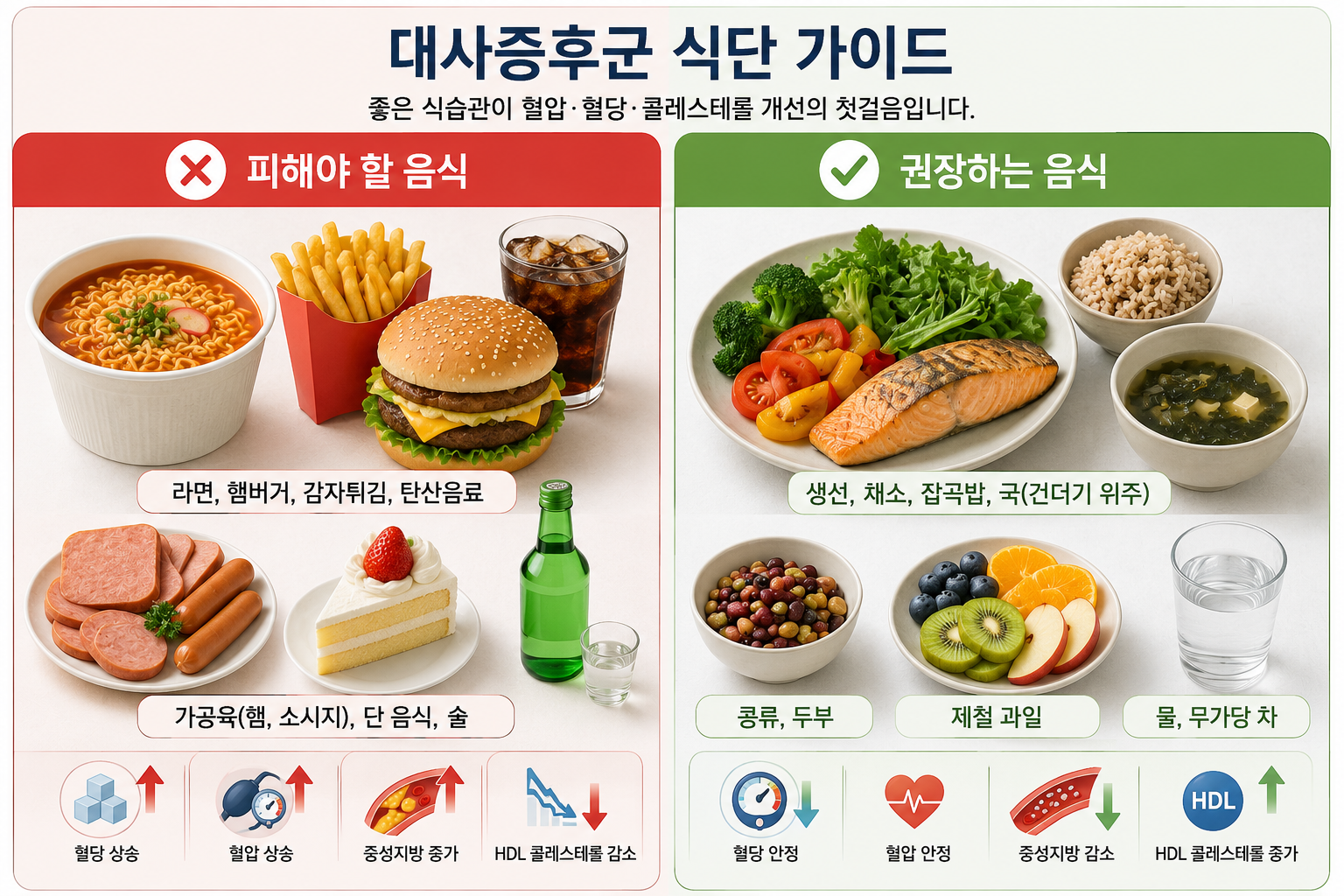
대사증후군 관리를 위해 무조건 굶거나 탄수화물을 완전히 끊을 필요는 없습니다. 오래 실천할 수 있는 방식으로 음식의 종류와 양을 조절하는 것이 중요합니다.
1. 흰밥의 양부터 조금 줄이기
평소 한 공기를 가득 먹는다면 처음부터 절반으로 줄이기보다 약 20~30% 정도 줄여보는 것이 좋습니다. 흰밥 일부를 현미, 보리, 귀리, 콩이 들어간 잡곡밥으로 바꾸면 식이섬유 섭취에도 도움이 됩니다.
밥을 줄인 만큼 채소와 단백질 반찬을 늘려야 배고픔을 줄일 수 있습니다.
2. 채소와 단백질을 먼저 먹기
식사할 때 채소 반찬과 단백질을 먼저 먹고 밥이나 면을 나중에 먹으면 탄수화물을 급하게 많이 먹는 것을 줄이는 데 도움이 됩니다.
단백질은 생선, 두부, 달걀, 콩, 닭고기, 지방이 적은 육류 등을 골고루 선택하는 것이 좋습니다. 질병관리청도 전곡물, 콩류, 채소와 같은 양질의 탄수화물과 식이섬유를 충분히 섭취하고, 설탕과 단순당을 줄일 것을 권고합니다.
3. 국물과 짠 음식 줄이기
찌개와 국을 먹을 때 건더기 위주로 먹고 국물은 남기는 습관이 필요합니다. 김치, 젓갈, 햄, 소시지, 라면, 즉석식품과 같은 짠 음식은 혈압 관리에 불리할 수 있습니다.
국이나 찌개를 하루 세끼마다 먹는다면 우선 하루 한 끼부터 국물 없는 식사로 바꿔보는 것도 좋은 방법입니다.
4. 단 음료와 술 줄이기
설탕이 들어간 커피, 탄산음료, 과일주스, 달콤한 요구르트는 포만감에 비해 당 섭취량이 많아질 수 있습니다. 음료는 물, 무가당 차, 설탕을 넣지 않은 커피로 바꾸는 것이 좋습니다.
술은 함께 먹는 안주뿐 아니라 알코올 자체도 중성지방과 체중 관리에 영향을 줄 수 있습니다. 특히 늦은 시간의 음주와 야식이 반복된다면 횟수와 양을 함께 줄여야 합니다.
운동은 식후 걷기와 근력운동을 함께

운동을 처음 시작한다면 무리하게 달리기보다 걷기부터 시작하는 것이 좋습니다.
식사 후 바로 앉거나 눕지 말고 몸 상태에 따라 10~20분 정도 가볍게 걸어보세요. 하루에 한 번이라도 꾸준히 실천하는 것이 중요합니다.
익숙해지면 일주일에 5일 정도, 하루 30분가량 빠르게 걷는 것을 목표로 할 수 있습니다. 여기에 스쿼트, 의자에서 앉았다 일어나기, 벽 밀기와 같은 근력운동을 일주일에 2~3회 더하면 근육량과 체력 관리에 도움이 됩니다.
관절질환이나 심장질환이 있거나 운동 중 가슴 통증, 호흡곤란, 심한 어지럼증이 생긴다면 운동을 중단하고 진료를 받아야 합니다.
체중보다 허리둘레를 함께 기록하자
대사증후군은 체중만 확인해서는 놓치기 쉽습니다. 체중이 많이 나가지 않아도 내장지방이 많고 허리둘레가 굵다면 위험요인이 있을 수 있습니다.
매일 측정할 필요는 없으며 일주일에 한 번, 비슷한 시간과 조건에서 체중과 허리둘레를 기록하는 것으로 충분합니다.
허리둘레는 숨을 편안하게 내쉰 상태에서 갈비뼈 가장 아래와 골반뼈 가장 위의 중간 부위를 줄자로 수평이 되도록 측정합니다. 줄자를 너무 강하게 조이거나 배를 일부러 집어넣지 않아야 합니다.
건강검진 후 병원에 가야 하는 경우
건강검진에서 한 항목만 기준을 조금 넘었다고 해서 모두 약물치료가 필요한 것은 아닙니다. 그러나 다음에 해당한다면 검진 결과지를 가지고 가까운 내과나 가정의학과를 방문하는 것이 좋습니다.
- 대사증후군 위험요인 5개 중 3개 이상에 해당할 때
- 공복혈당이 반복해서 높게 나올 때
- 혈압이 여러 번 측정해도 계속 높을 때
- 중성지방이나 LDL 콜레스테롤이 많이 높을 때
- 지방간과 간 수치 이상이 함께 있을 때
- 부모나 형제 중 당뇨병·심근경색·뇌졸중 환자가 있을 때
- 가슴 통증, 호흡곤란, 한쪽 팔다리 마비 등의 증상이 있을 때
특히 가슴을 짓누르는 통증, 갑작스러운 호흡곤란, 얼굴이나 팔다리 한쪽의 마비, 말이 어눌해지는 증상은 응급상황일 수 있으므로 즉시 119에 도움을 요청해야 합니다.
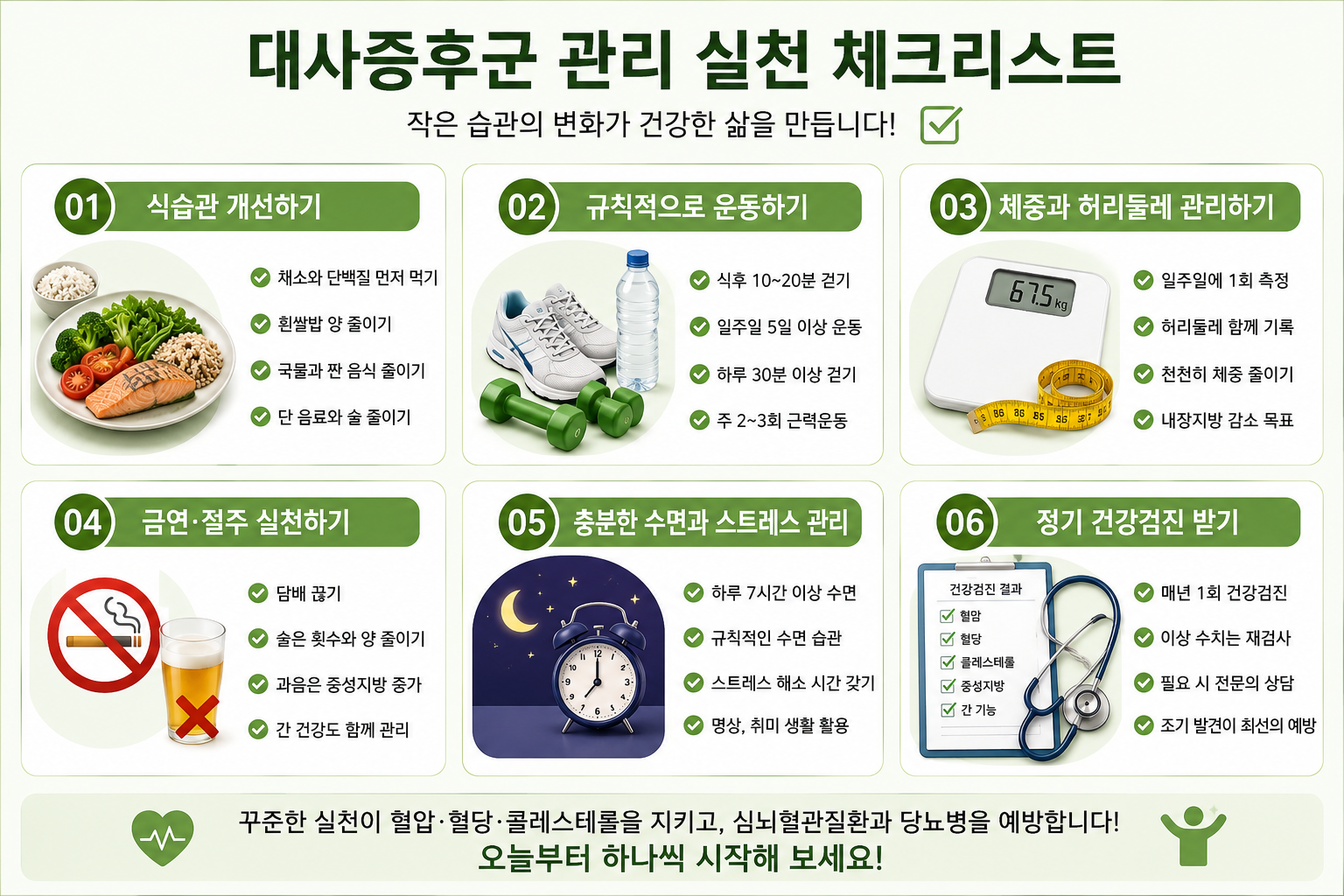
대사증후군 관리, 한꺼번에 바꾸려고 하지 마세요
대사증후군은 하루아침에 생기는 문제가 아닌 만큼 며칠 동안 극단적인 식단을 한다고 해결되지는 않습니다.
처음에는 다음 다섯 가지부터 시작해 보세요.
첫째, 밥과 면의 양을 지금보다 조금 줄입니다.
둘째, 단 음료를 물이나 무가당 차로 바꿉니다.
셋째, 식사 후 10~20분 정도 걷습니다.
넷째, 일주일에 한 번 체중과 허리둘레를 기록합니다.
다섯째, 건강검진에서 이상이 나온 항목은 정기적으로 재검사합니다.
혈압, 혈당, 콜레스테롤 수치는 서로 별개의 문제가 아니라 식습관과 체중, 운동량, 수면 등 여러 생활습관을 통해 연결되어 있습니다.
건강검진 결과에서 경계 수치가 나왔다면 “아직 병은 아니니까 괜찮다”고 넘기기보다 생활습관을 바꿀 수 있는 신호로 받아들이는 것이 좋습니다. 작은 변화라도 꾸준히 이어가는 것이 대사증후군과 여러 성인병을 예방하는 가장 현실적인 첫걸음입니다.
※ 이 글은 일반적인 건강정보를 제공하기 위한 내용입니다. 개인의 검사 결과와 복용 중인 약, 기저질환에 따라 관리 방법이 달라질 수 있으므로 정확한 진단과 치료는 의료진과 상담하시기 바랍니다.
함께 보면 좋은글
혈당 스파이크가 살찌는 진짜 이유! 식사 순서만 바꿔도 체중이 달라집니다 (2026 최신)
다이어트를 열심히 하는데도 살이 잘 빠지지 않는다면 칼로리보다 먼저 확인해야 할 것이 있습니다. 바로 혈당 스파이크입니다.최근 건강 전문가들이 혈당 관리의 중요성을 강조하는 이유는 단
myview90733.com
혈당 스파이크가 살찌는 진짜 이유! 식사 순서만 바꿔도 체중이 달라집니다 (2026 최신)
다이어트를 열심히 하는데도 살이 잘 빠지지 않는다면 칼로리보다 먼저 확인해야 할 것이 있습니다. 바로 혈당 스파이크입니다.최근 건강 전문가들이 혈당 관리의 중요성을 강조하는 이유는 단
myview90733.com
What If Your Blood Pressure, Blood Sugar, and Cholesterol Are High? A Complete Guide to Metabolic Syndrome
Many people receive their annual health checkup results, notice that their blood pressure, fasting blood sugar, or cholesterol levels are slightly higher than normal, and simply move on with their daily lives.
Because there are usually no obvious symptoms, it is easy to believe that everything is still under control.
However, when abdominal obesity, high blood pressure, elevated blood sugar, and abnormal cholesterol levels begin to appear together, your body may already be showing early signs of metabolic syndrome.
Metabolic syndrome is not a single disease. Instead, it is a group of health conditions that occur together and significantly increase the risk of developing type 2 diabetes, heart disease, and stroke.
The good news is that metabolic syndrome can often be improved through healthy lifestyle changes before serious complications develop.
What Is Metabolic Syndrome?
Metabolic syndrome refers to a combination of several metabolic risk factors that occur at the same time.
Doctors generally diagnose metabolic syndrome when a person has three or more of the following risk factors:
- Abdominal obesity (large waist circumference)
- High blood pressure
- Elevated fasting blood glucose
- High triglyceride levels
- Low HDL ("good") cholesterol
These conditions are closely connected rather than independent problems. When one risk factor worsens, the others often follow.
For this reason, metabolic syndrome is considered one of the strongest warning signs that the body's metabolism is becoming unhealthy.
Why Does Metabolic Syndrome Develop?
The main cause of metabolic syndrome is insulin resistance.
Insulin is a hormone produced by the pancreas that allows glucose to enter the body's cells and be used as energy.
When insulin resistance develops, the body's cells stop responding properly to insulin.
As a result, blood sugar begins to rise, and the pancreas produces even more insulin to compensate.
Over time, this process can lead to:
- Increased blood sugar
- Elevated triglycerides
- Higher blood pressure
- Weight gain around the abdomen
- Lower HDL cholesterol
One of the biggest contributors to insulin resistance is visceral fat, also known as abdominal fat.
Unlike fat stored under the skin, visceral fat surrounds internal organs and releases substances that promote chronic inflammation and metabolic problems.
Lifestyle Habits That Increase Your Risk
Several everyday habits can gradually increase the risk of metabolic syndrome.
These include:
- Eating processed foods and fast food frequently
- Drinking sugary beverages every day
- Consuming excessive refined carbohydrates such as white rice, bread, noodles, and pastries
- Lack of regular exercise
- Sitting for long hours every day
- Frequent late-night meals
- Heavy alcohol consumption
- Smoking
- Chronic stress
- Poor sleep quality
- Gradual weight gain, especially around the waist
Although genetics can influence your risk, lifestyle habits remain the most important factor that you can actually control.
Why Is Metabolic Syndrome So Dangerous?
One of the biggest problems is that metabolic syndrome often develops without noticeable symptoms.
Many people feel completely healthy even while their blood pressure, blood sugar, and cholesterol levels are slowly becoming abnormal.
For this reason, regular health examinations play an important role in early detection.
Some people may notice warning signs such as:
- A steadily increasing waist size
- Feeling sleepy after meals
- Easy fatigue
- Gradual weight gain
- Fat accumulation around the abdomen
However, these symptoms alone cannot diagnose metabolic syndrome.
The only reliable way to identify the condition is through measurements such as blood pressure, fasting blood glucose, triglycerides, HDL cholesterol, and waist circumference.
If your recent health checkup shows abnormalities in several of these areas, it is worth discussing the results with your doctor instead of waiting until symptoms become severe.
Early intervention is much easier than treating diabetes or cardiovascular disease after they have already developed.
Health Risks of Metabolic Syndrome
Ignoring metabolic syndrome can have serious long-term consequences.
Because several risk factors occur together, they place continuous stress on the heart, blood vessels, liver, kidneys, and pancreas.
Without proper management, metabolic syndrome may significantly increase the risk of developing:
- Type 2 diabetes
- High blood pressure
- Coronary artery disease
- Heart attack
- Stroke
- Fatty liver disease
- Chronic kidney disease
The encouraging news is that even modest improvements in body weight and daily habits can reduce these risks.
Small changes practiced consistently are often more effective than extreme diets that last only a few weeks.
How to Improve Your Diet
Diet is one of the most effective ways to manage metabolic syndrome.
Rather than eliminating carbohydrates completely, focus on improving the quality and quantity of the foods you eat.
Reduce Refined Carbohydrates
Foods such as white rice, white bread, instant noodles, pastries, cakes, cookies, and sugary cereals can cause rapid increases in blood sugar.
Instead, choose:
- Brown rice
- Whole grains
- Oats
- Barley
- Sweet potatoes
- Beans
These foods contain more fiber and help stabilize blood sugar levels.
Eat Vegetables First
A simple habit that many nutrition experts recommend is eating vegetables before carbohydrates.
Starting your meal with vegetables and protein can help slow the rise in blood sugar after eating while also helping you feel full sooner.
Try filling at least half of your plate with vegetables during lunch and dinner.
Choose Lean Protein
Protein helps maintain muscle mass and keeps you satisfied longer.
Good choices include:
- Fish
- Skinless chicken
- Eggs
- Tofu
- Beans
- Low-fat dairy products
Limit processed meats such as sausages, bacon, and ham whenever possible.
Reduce Sugary Drinks
Many people consume large amounts of sugar without realizing it.
Soft drinks, sweetened coffee, energy drinks, flavored milk, and fruit juice can all contribute to excess calorie intake.
Replacing these beverages with water, sparkling water, or unsweetened tea is one of the easiest improvements you can make.
Limit Salt Intake
Too much sodium can increase blood pressure.
To reduce sodium:
- Eat less instant noodles.
- Limit soups and salty broths.
- Reduce processed foods.
- Use herbs instead of excessive salt for flavor.
Exercise Is Essential
Exercise improves insulin sensitivity and helps reduce abdominal fat.
You do not need intense workouts to see benefits.
Walking is an excellent place to start.
Aim for:
- At least 30 minutes of brisk walking most days of the week
- 150 minutes of moderate exercise every week
- Strength training two or three times weekly
Simple strength exercises such as squats, wall push-ups, resistance bands, or light dumbbells can help maintain muscle mass while improving metabolism.
Even short walks after meals may help lower post-meal blood sugar.
Weight Loss Does Not Need to Be Extreme
Many people believe they must lose a large amount of weight immediately.
In reality, gradual and sustainable weight loss is usually more successful.
Focus on:
- Eating slightly smaller portions
- Walking every day
- Sleeping regularly
- Avoiding late-night snacks
- Drinking enough water
Waist circumference is often a better indicator of metabolic health than body weight alone.
As abdominal fat decreases, blood pressure, blood sugar, and cholesterol often improve together.
Monitor Your Health Regularly
If you have been told that your blood pressure, fasting glucose, or cholesterol is slightly elevated, do not wait until the next annual checkup without making changes.
Keep track of:
- Blood pressure
- Body weight
- Waist circumference
- Blood sugar (if recommended)
- Cholesterol levels
- Physical activity
Regular monitoring allows you to recognize improvements early and stay motivated.
Remember that metabolic syndrome develops gradually, but it can also improve gradually through consistent healthy habits.
Every healthy meal, every walk, and every positive lifestyle change moves you one step closer to better long-term health.
When Should You See a Doctor?
Not everyone with slightly elevated blood pressure or blood sugar needs medication immediately. However, if multiple metabolic risk factors are present, it is important to seek professional medical advice.
You should consider visiting your healthcare provider if:
- Your health checkup shows three or more metabolic syndrome risk factors.
- Your fasting blood glucose is consistently above the normal range.
- Your blood pressure remains elevated after repeated measurements.
- Your triglyceride or LDL cholesterol levels continue to rise.
- You have been diagnosed with fatty liver disease.
- You have a family history of diabetes, heart disease, or stroke.
- You experience unexplained chest pain, shortness of breath, or severe fatigue.
Early medical evaluation allows doctors to recommend lifestyle changes or treatment before serious complications develop.
Five Daily Habits That Can Make a Big Difference
Improving metabolic syndrome does not require drastic changes overnight. In fact, small, consistent habits are much more effective than short-term extreme diets.
Start with these five simple habits:
1. Reduce Portion Sizes
Instead of skipping meals, reduce the amount of white rice, bread, noodles, and sugary snacks while increasing vegetables and lean protein.
2. Walk Every Day
A 20 to 30-minute brisk walk after meals can improve blood sugar control and help reduce abdominal fat over time.
3. Drink More Water
Replace sugary beverages with water or unsweetened tea whenever possible.
4. Sleep Well
Aim for seven to eight hours of quality sleep every night. Poor sleep can increase insulin resistance and appetite.
5. Keep Track of Your Health
Measure your body weight and waist circumference regularly, and follow up on your blood pressure, blood sugar, and cholesterol according to your doctor's recommendations.
Prevention Is Always Better Than Treatment
Metabolic syndrome develops slowly, often over many years. Because symptoms are usually mild or absent, many people do not realize they are at risk until diabetes or cardiovascular disease has already developed.
Fortunately, the condition is also highly responsive to lifestyle improvements.
Healthy eating, regular physical activity, maintaining a healthy weight, reducing stress, avoiding smoking, limiting alcohol, and getting enough sleep all work together to improve metabolic health.
The earlier these habits begin, the greater the long-term benefits.
Final Thoughts
Your annual health checkup is more than just a routine examination—it is an opportunity to detect health risks before they become serious diseases.
If your blood pressure, fasting blood sugar, triglycerides, or cholesterol levels are slightly above normal, do not ignore them simply because you feel well.
Metabolic syndrome is a warning sign that your body needs attention, not a reason to panic.
Simple daily habits—choosing healthier foods, walking regularly, maintaining a healthy waistline, and attending regular medical checkups—can dramatically reduce your risk of diabetes, heart disease, and stroke.
Remember, lasting health is not built through perfection but through consistent, sustainable choices made every single day.
Disclaimer: This article is intended for educational purposes only and should not replace professional medical advice. If you have abnormal health checkup results or existing medical conditions, consult a qualified healthcare professional for personalized evaluation and treatment.
'건강' 카테고리의 다른 글
| 위고비·마운자로 맞을 때 피하면 좋은 음식 7가지! 효과를 높이는 식단과 꼭 먹어야 할 음식 총정리 (0) | 2026.07.16 |
|---|---|
| 마운자로(Mounjaro)란? 위고비보다 더 강력한 비만 치료제? 가격·효과·부작용 총정리 (2026 최신) (0) | 2026.07.15 |
| 혈당 스파이크가 살찌는 진짜 이유! 식사 순서만 바꿔도 체중이 달라집니다 (2026 최신) (0) | 2026.07.15 |
| 복부 내장지방에 에 효과 좋은 약국약 포함 건강기능식품 TOP 5와 생활습관까지 한 번에 정리 (1) | 2026.07.10 |
| 복부 내장지방 없애는 최고의 건강식품 10가지! 의사들도 추천하는 생활습관 총정리 (0) | 2026.07.08 |