본문 바로가기
건강

수족구병 환자 급증! 아이에게 가장 먼저 나타나는 증상과 예방법 총정리

by 하늘별 2026. 7. 28.


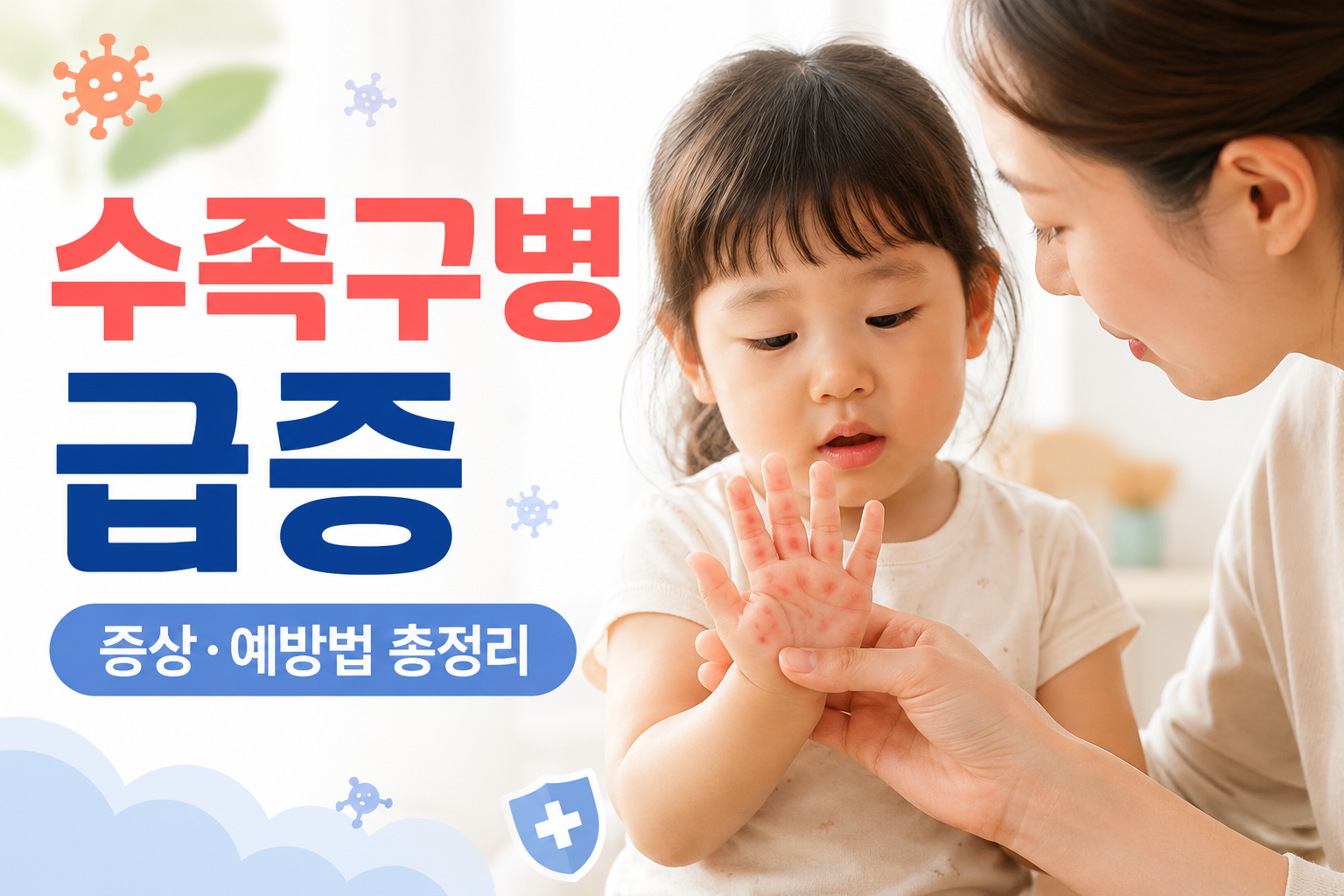
여름철이 되면 어린이집과 유치원을 중심으로 자주 유행하는 질환이 있습니다. 바로 수족구병입니다. 최근에도 영유아를 중심으로 환자가 증가하면서 부모들의 걱정이 커지고 있습니다. 처음에는 단순한 감기처럼 시작되는 경우가 많아 치료 시기를 놓치기도 하고, 전염력이 강해 가족이나 어린이집 친구들에게 빠르게 퍼질 수 있어 더욱 주의가 필요합니다.


특히 손과 발에 물집이 생기고 입안이 헐어 아이가 밥을 먹지 못하거나 고열이 동반되는 경우가 많아 부모 입장에서는 당황하기 쉽습니다.


이번 글에서는 수족구병이 왜 늘고 있는지, 초기 증상부터 감기와의 차이, 집에서 관리하는 방법, 병원을 꼭 방문해야 하는 위험 신호, 어린이집 등원 시기, 예방법까지 한 번에 정리해 보겠습니다.

수족구병이란?

수족구병은 장바이러스(엔테로바이러스)에 의해 발생하는 감염병으로, 주로 만 5세 이하 영유아에게 많이 발생합니다.


이름 그대로 손, 발, 입에 물집이나 발진이 생기는 것이 가장 큰 특징이며, 여름과 초가을에 특히 많이 유행합니다.


대부분은 일주일 정도 지나면 자연스럽게 회복되지만, 드물게 뇌수막염이나 뇌염 등 합병증이 발생할 수 있어 초기 관찰이 중요합니다.

최근 수족구병 환자가 늘어나는 이유
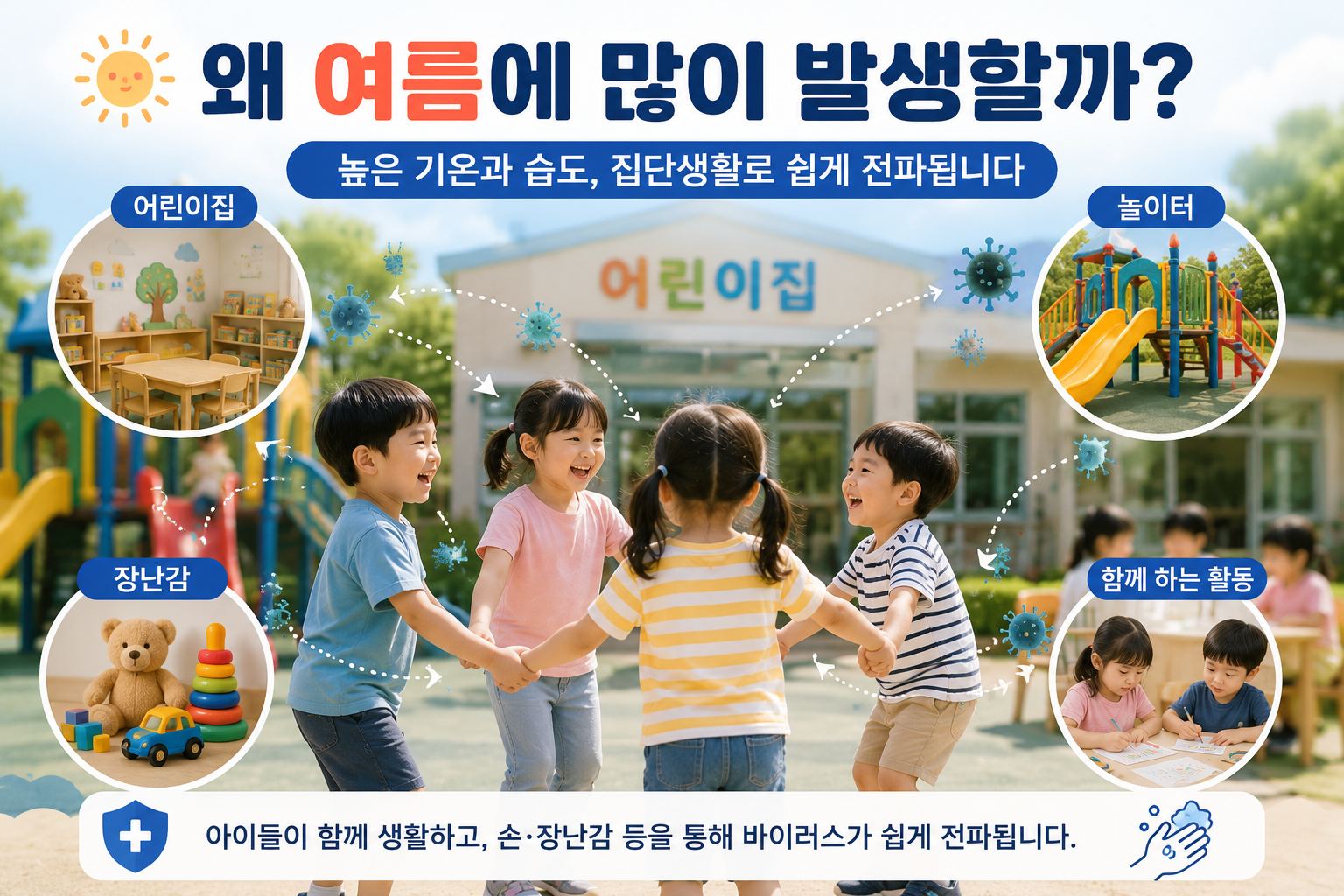
 

최근 수족구병 환자가 증가하는 가장 큰 이유는 여름철 높은 기온과 습도 때문입니다.


장바이러스는 여름철 활동이 활발해지고, 어린이집과 유치원처럼 아이들이 함께 생활하는 공간에서는 쉽게 전파됩니다.


특히 다음과 같은 환경에서는 감염 위험이 더욱 높아집니다.

  • 어린이집 공동생활
  • 유치원 단체활동
  • 키즈카페
  • 물놀이 시설
  • 장난감 공동 사용
  • 손 씻기 부족

면역력이 아직 충분히 형성되지 않은 영유아는 감염될 가능성이 높기 때문에 더욱 주의해야 합니다.

수족구병 초기 증상
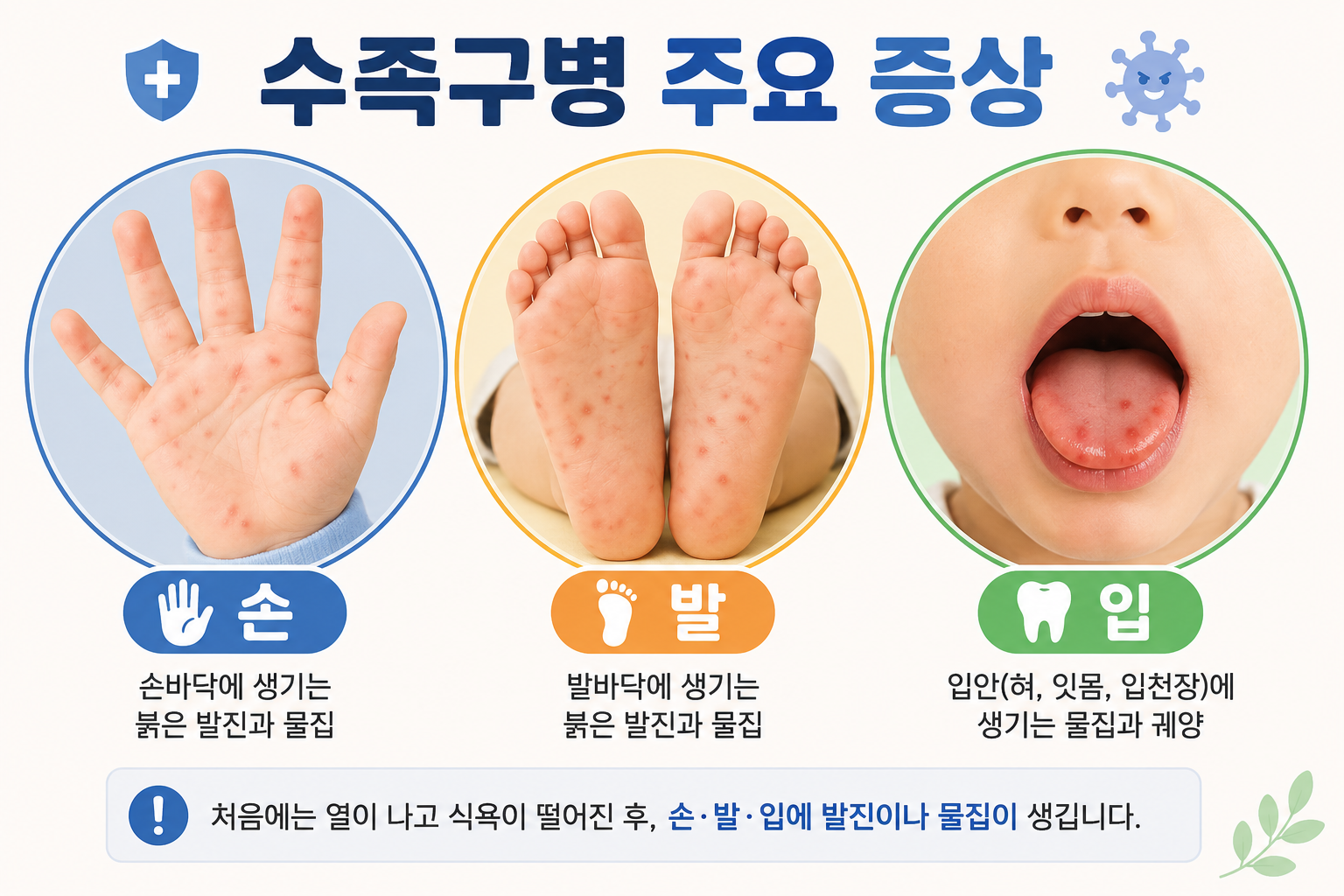
 

초기에는 일반 감기와 매우 비슷하게 시작됩니다.


대표적인 증상은 다음과 같습니다.

① 갑작스러운 고열

38~39도 이상의 열이 하루 정도 지속되는 경우가 많습니다.

② 입안 통증

혀와 잇몸, 입천장에 작은 물집이 생기면서 심한 통증이 나타날 수 있습니다.


아이가 갑자기 밥을 먹지 않거나 침을 많이 흘린다면 입안을 확인해 보는 것이 좋습니다.

③ 손바닥과 발바닥 물집

작은 붉은 반점이나 물집이 생기며 가렵기보다는 통증을 호소하는 경우가 많습니다.

④ 엉덩이와 무릎 주변 발진

아이에 따라 엉덩이나 무릎에도 발진이 나타날 수 있습니다.

감기와 수족구병은 어떻게 다를까?
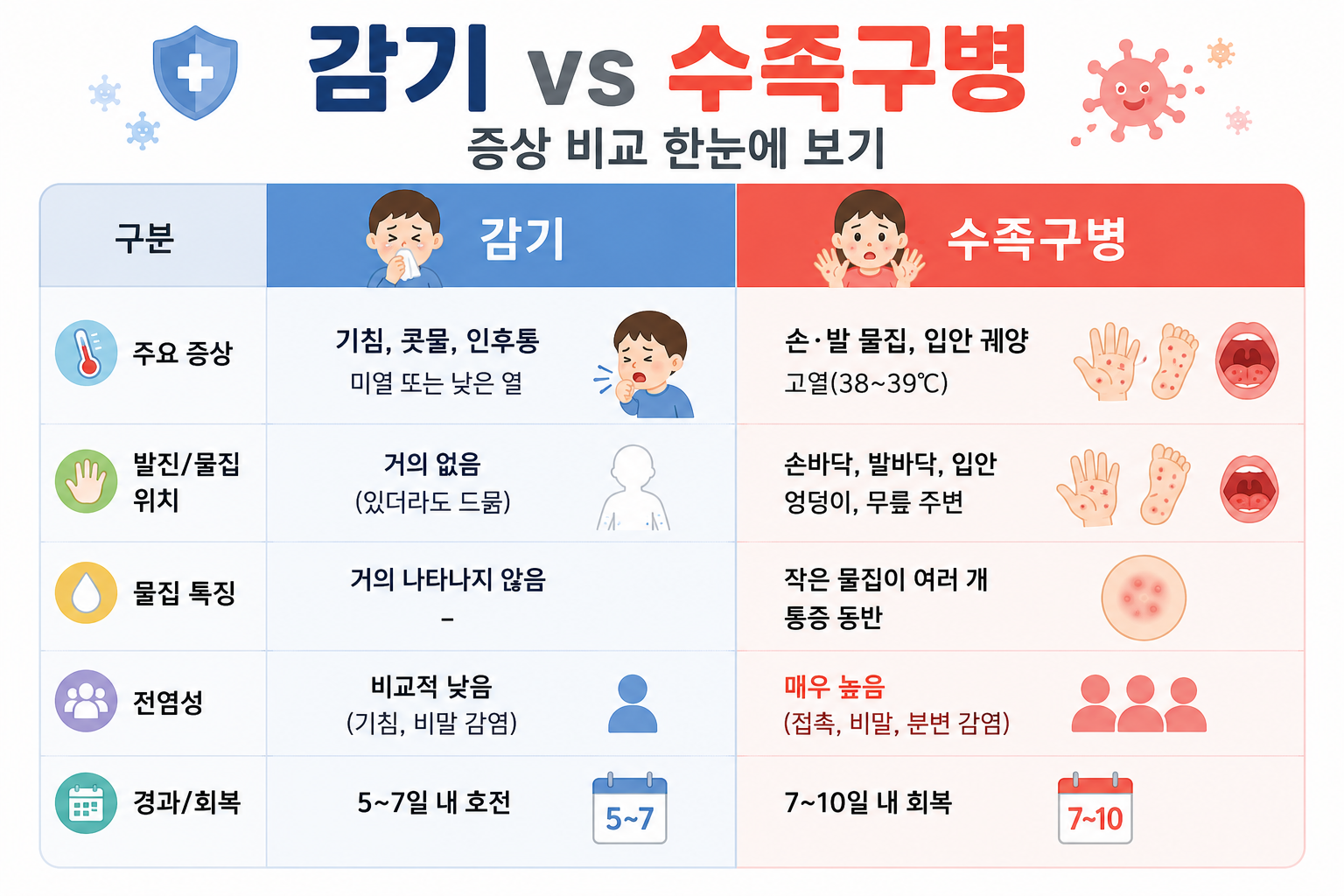
 

감기는 주로 기침과 콧물이 중심이지만, 수족구병은 손·발·입에 나타나는 특징적인 물집이 가장 큰 차이입니다.


비교해 보면 다음과 같습니다.

  • 감기: 기침, 콧물, 인후통이 주증상
  • 수족구병: 손·발 물집, 입안 궤양, 고열
  • 수두: 몸통부터 시작되는 전신 물집이 특징

손과 발에 물집이 함께 나타난다면 수족구병을 의심해 보는 것이 좋습니다.

집에서 어떻게 관리해야 할까?
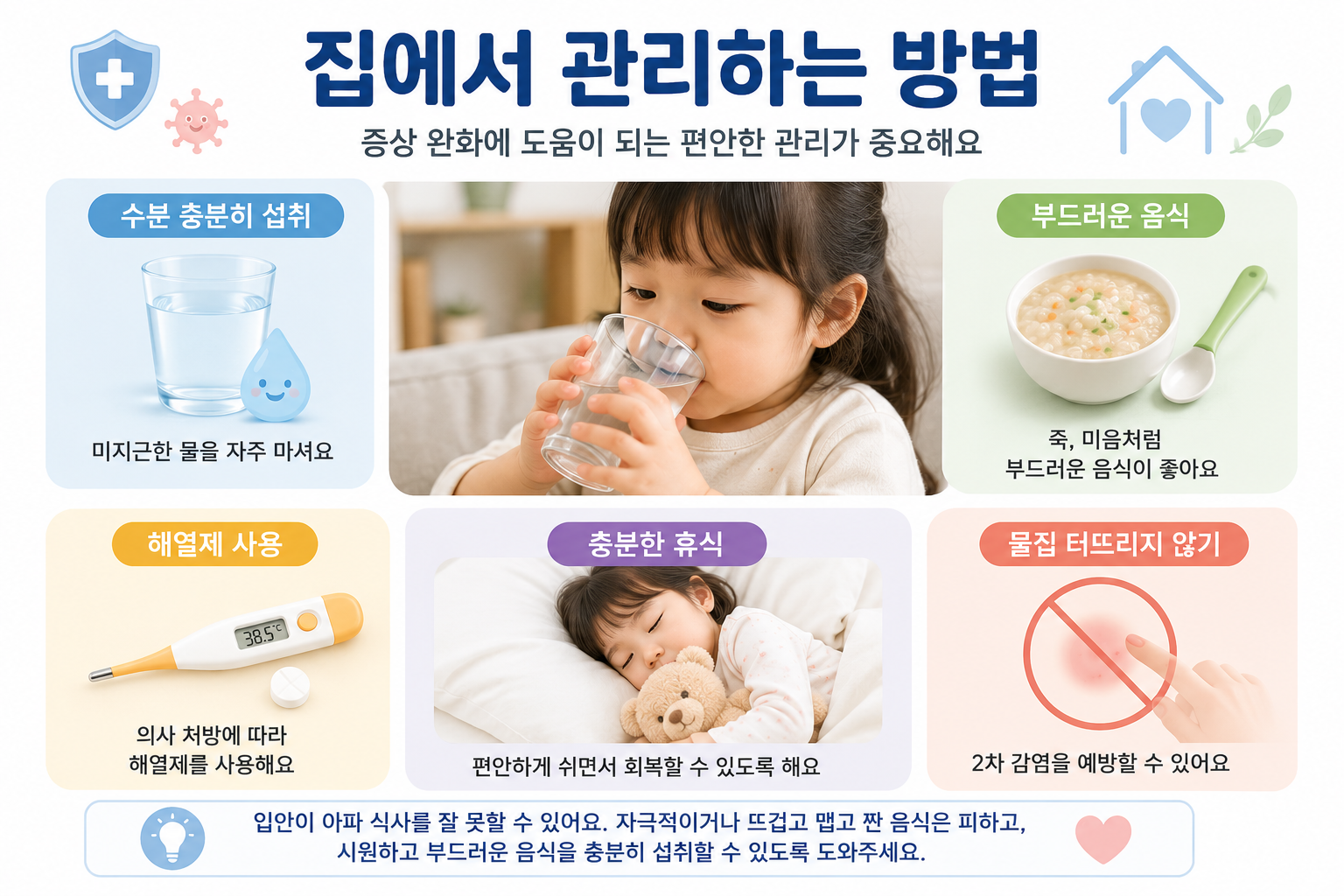
 

대부분은 특별한 치료제 없이 증상을 완화하는 치료를 하게 됩니다.


다음과 같은 관리가 도움이 됩니다.

  • 충분한 수분 섭취
  • 미지근한 물 자주 마시기
  • 죽이나 미음처럼 부드러운 음식 섭취
  • 자극적인 음식 피하기
  • 충분한 휴식
  • 처방받은 해열제 사용

입안이 많이 아프다고 해서 뜨겁거나 맵고 짠 음식은 피하는 것이 좋습니다.


또한 물집은 일부러 터뜨리지 않는 것이 감염 예방에 도움이 됩니다.

이런 증상이 보이면 바로 병원으로
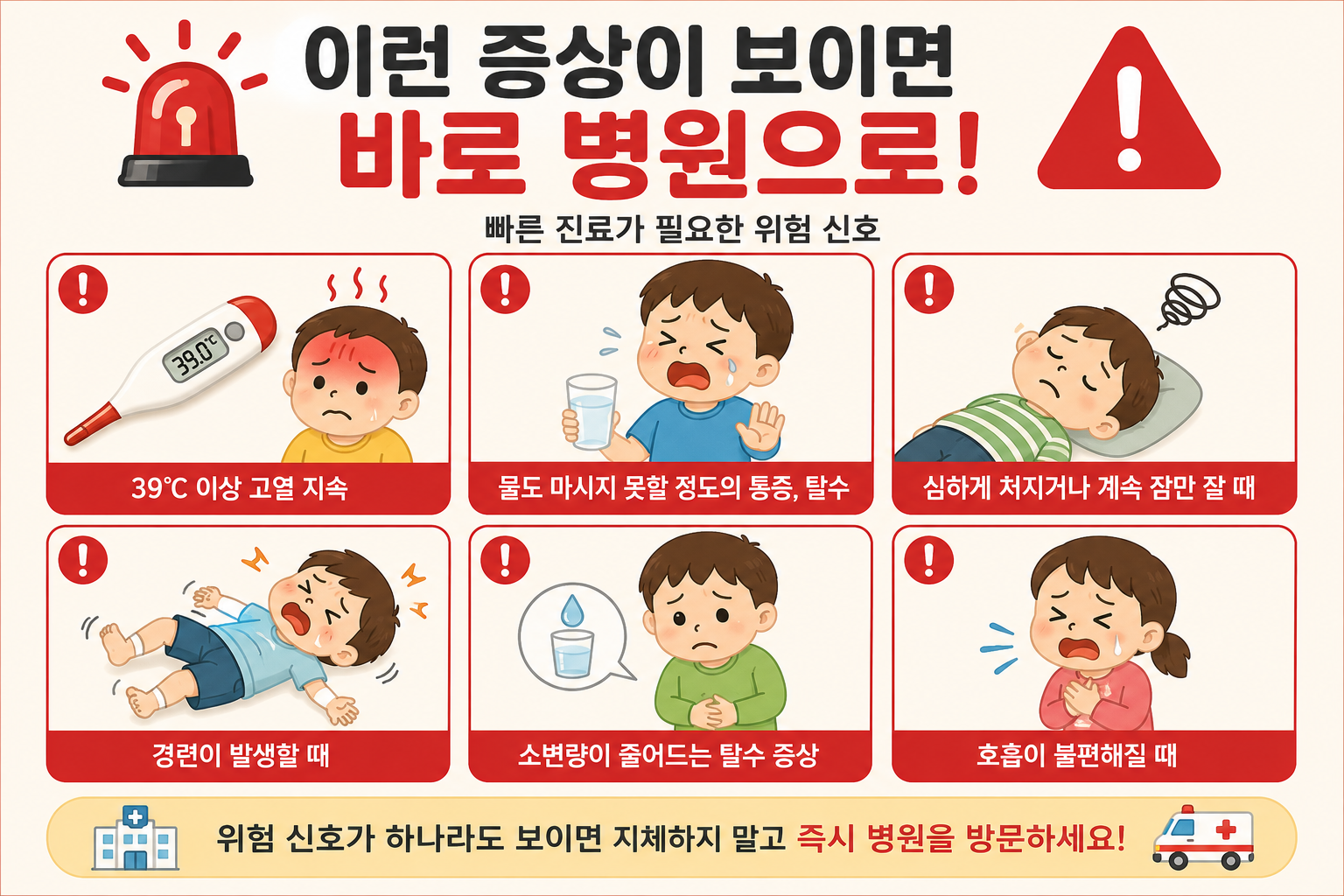
 

다음과 같은 증상이 나타난다면 즉시 의료기관을 방문하는 것이 좋습니다.

  • 39도 이상의 고열이 계속될 때
  • 물도 마시지 못할 정도의 입안 통증
  • 소변량이 줄어드는 탈수 증상
  • 심하게 처지거나 계속 잠만 잘 때
  • 경련이 발생할 때
  • 호흡이 불편해질 때

드물지만 합병증의 신호일 수 있으므로 빠른 진료가 필요합니다.

어린이집과 유치원은 언제 다시 갈 수 있을까?
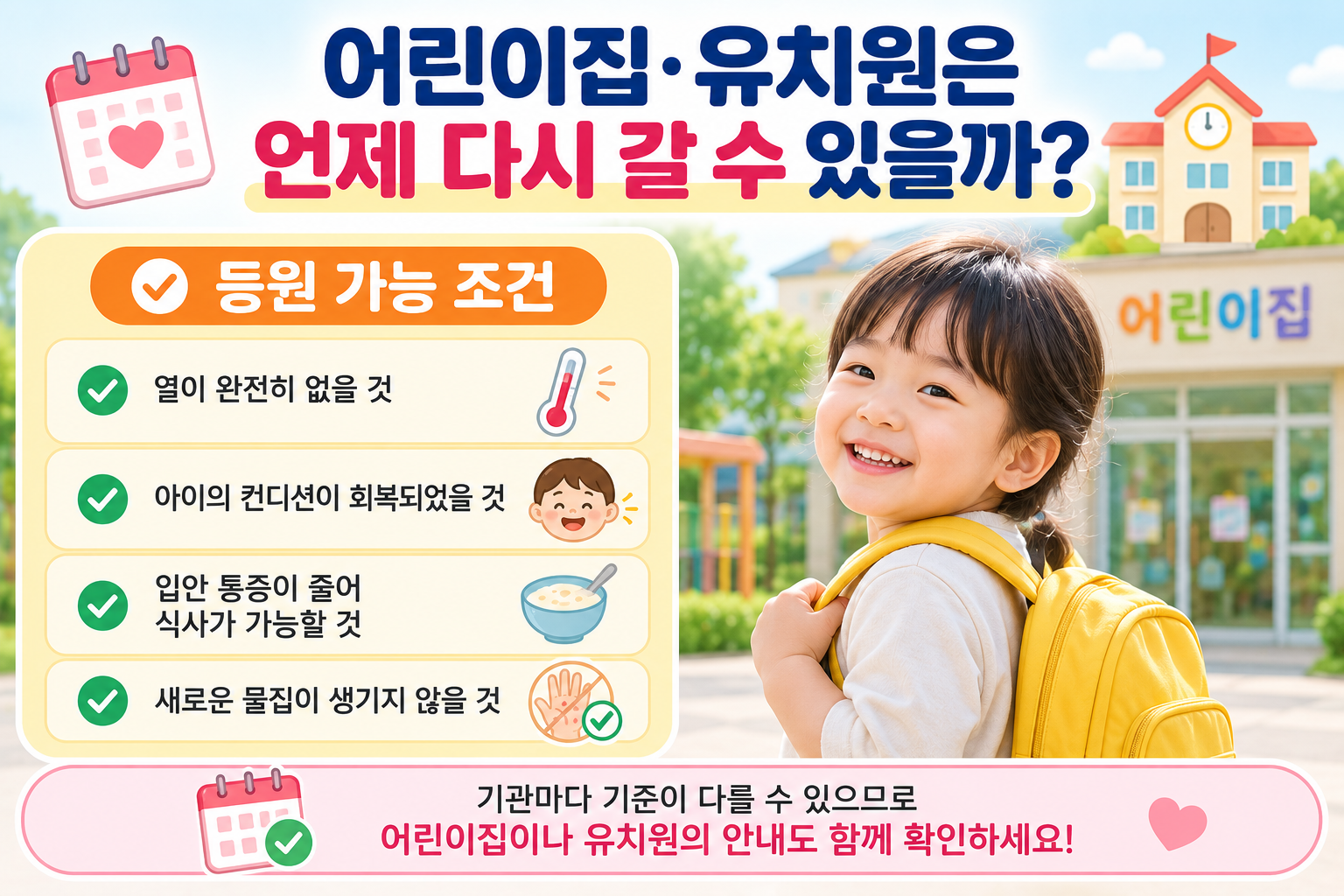
 

많은 부모들이 가장 궁금해하는 부분입니다.


수족구병은 전염력이 높은 질환이기 때문에 열이 내렸다고 바로 등원하는 것은 바람직하지 않습니다.


일반적으로는 다음과 같은 경우 등원을 고려합니다.

  • 열이 완전히 없어졌을 것
  • 아이의 컨디션이 회복되었을 것
  • 입안 통증이 줄어 식사가 가능할 것
  • 새로운 물집이 생기지 않을 것

기관마다 기준이 다를 수 있으므로 어린이집이나 유치원의 안내를 함께 확인하는 것이 좋습니다.

수족구병 예방법
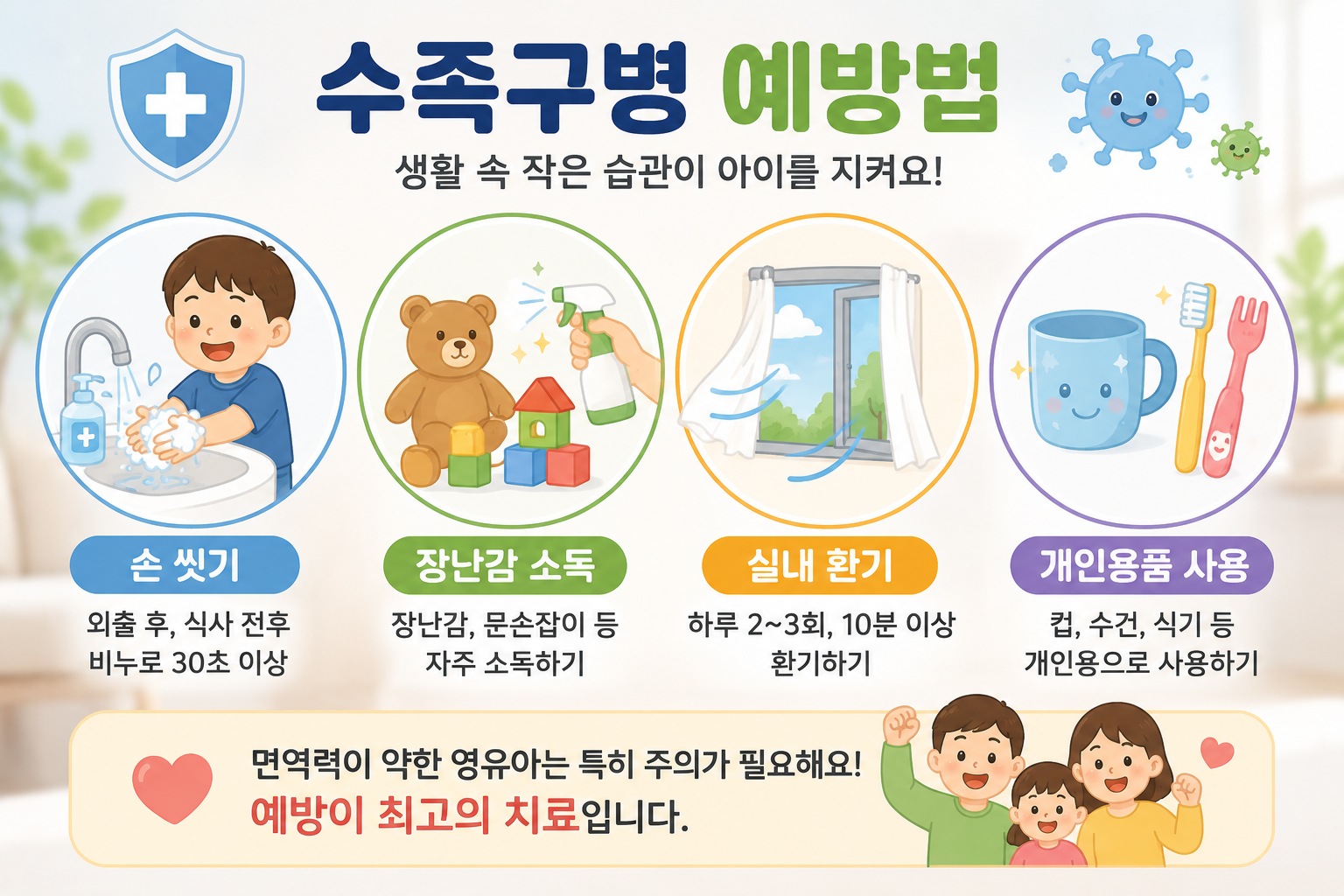
 

수족구병은 예방이 가장 중요합니다.


생활 속에서 다음 수칙을 실천해 보세요.

  • 흐르는 물에 30초 이상 손 씻기
  • 외출 후 손 씻기 습관
  • 장난감과 문손잡이 자주 소독하기
  • 수건과 식기를 함께 사용하지 않기
  • 기침 예절 지키기
  • 실내 자주 환기하기
  • 증상이 있으면 어린이집 등원 자제하기

평소 위생관리만 잘해도 감염 위험을 크게 줄일 수 있습니다.

부모가 꼭 기억해야 할 체크리스트
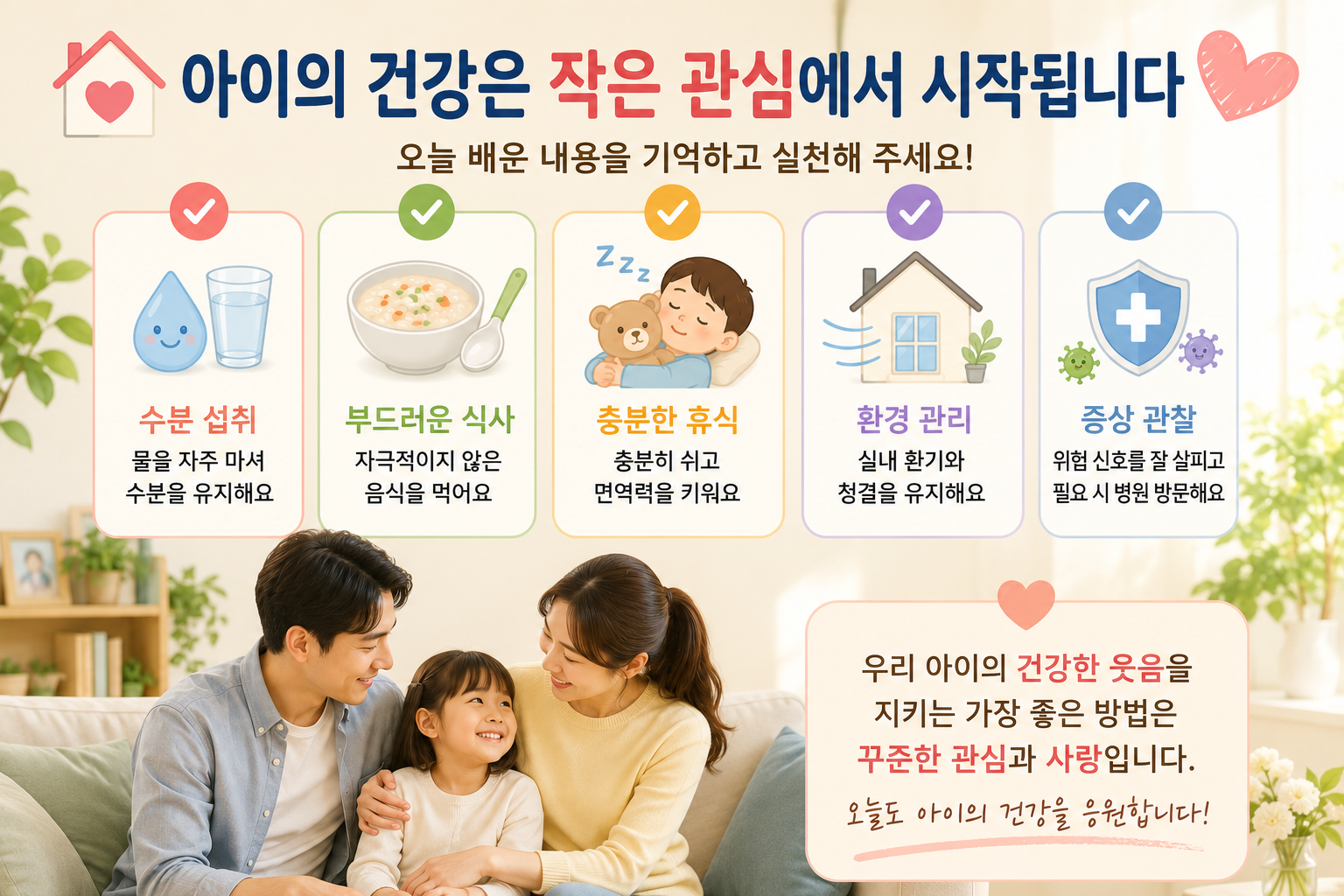
 

수족구병은 대부분 큰 후유증 없이 회복되는 질환이지만, 초기에 잘 관리하는 것이 무엇보다 중요합니다.


아이가 갑자기 열이 나면서 손과 발에 물집이 생기고 입안 통증을 호소한다면 단순 감기로 넘기지 말고 수족구병 여부를 확인해 보세요.


특히 충분한 수분 섭취와 휴식, 위생관리를 철저히 하고, 고열이 지속되거나 탈수·경련 같은 위험 신호가 나타난다면 즉시 병원을 방문해야 합니다.


여름철에는 어린이집과 유치원을 중심으로 감염이 빠르게 확산될 수 있으므로, 부모의 빠른 대처와 예방 습관이 아이의 건강을 지키는 가장 좋은 방법입니다.


Hand, Foot, and Mouth Disease Cases on the Rise! Early Symptoms, Prevention, and Home Care Guide

During the summer season, one of the most common illnesses affecting young children is Hand, Foot, and Mouth Disease (HFMD). Recently, the number of cases has been increasing again, especially among infants and preschool children, causing concern for many parents.


HFMD often begins with symptoms similar to a common cold, making it easy to overlook in the early stage. Because it spreads very easily among children, one infected child can quickly pass the virus to classmates, siblings, and family members.


Children may develop painful blisters on their hands, feet, and inside the mouth. As a result, they often refuse to eat or drink and may develop a high fever. Understanding the early signs and knowing how to respond can help prevent complications.


In this guide, you'll learn why HFMD is becoming more common, its early symptoms, how to tell it apart from a common cold, home care tips, warning signs that require immediate medical attention, when children can safely return to daycare or kindergarten, and practical prevention methods.

What Is Hand, Foot, and Mouth Disease?

Hand, Foot, and Mouth Disease is a contagious viral infection caused by enteroviruses. It mainly affects children under five years of age.


As the name suggests, the disease typically causes blisters or rashes on the hands, feet, and inside the mouth. Outbreaks are most common during the summer and early autumn.


Most children recover within seven to ten days without any specific treatment. However, in rare cases, complications such as viral meningitis or encephalitis may occur, making early observation and proper care very important.

Why Are Cases Increasing?

HFMD spreads more easily during warm and humid weather, which is why outbreaks are common in summer.


Because young children spend long hours together in daycare centers and kindergartens, the virus can spread rapidly through close contact.


Common situations that increase the risk of infection include:

  • Daycare and kindergarten group activities
  • Indoor playgrounds and kids' cafés
  • Water play facilities
  • Sharing toys
  • Poor hand hygiene
  • Frequent close contact among young children

Since infants and preschoolers have not yet developed strong immunity, they are more likely to become infected.

Early Symptoms of HFMD

The illness often starts with symptoms that resemble a common cold.


Typical early symptoms include:

High Fever

A sudden fever of 38–39°C (100.4–102.2°F) or higher is common during the early stage.

Painful Mouth Sores

Small blisters or ulcers develop on the tongue, gums, and roof of the mouth, making eating and drinking painful.


If your child suddenly refuses food or drools more than usual, check inside the mouth carefully.

Blisters on the Hands and Feet

Small red spots gradually develop into blisters on the palms of the hands and the soles of the feet.


Unlike many skin rashes, these blisters are usually painful rather than itchy.

Rash Around the Buttocks or Knees

Some children also develop red rashes around the buttocks, knees, or other areas of the body.

How Is HFMD Different from a Common Cold?

At first, HFMD may look like an ordinary cold because both illnesses can begin with a fever. However, there are several important differences.


A common cold usually causes symptoms such as coughing, a runny nose, sneezing, and a sore throat. In contrast, HFMD is characterized by painful blisters on the hands, feet, and inside the mouth.


Chickenpox can also cause blisters, but they usually appear across the entire body, especially on the chest, back, and face. HFMD, on the other hand, mainly affects the palms, soles, and mouth.


If your child develops a fever along with blisters on the hands and feet, HFMD should be strongly suspected.

Home Care Tips

There is no specific antiviral treatment for most cases of HFMD. The primary goal is to relieve symptoms and keep the child comfortable while the body fights off the virus.


The following home care measures are recommended:

  • Encourage your child to drink plenty of water.
  • Offer cool or lukewarm drinks frequently to prevent dehydration.
  • Serve soft foods such as porridge, soup, yogurt, mashed potatoes, or applesauce.
  • Avoid spicy, salty, acidic, or very hot foods that can irritate mouth sores.
  • Make sure your child gets plenty of rest.
  • Use fever-reducing medicine only as directed by a healthcare professional.

Children with painful mouth ulcers may refuse to eat or drink, so preventing dehydration becomes especially important.


Parents should also avoid popping the blisters. Breaking them may increase the risk of secondary bacterial infection and delay healing.

When Should You See a Doctor Immediately?

Although most children recover without serious problems, some symptoms require prompt medical attention.


Seek medical care immediately if your child experiences any of the following:

  • A fever above 39°C (102.2°F) that does not improve.
  • Severe mouth pain that prevents drinking fluids.
  • Signs of dehydration, such as very little urine, dry mouth, or unusual sleepiness.
  • Extreme drowsiness or difficulty waking up.
  • Seizures or convulsions.
  • Difficulty breathing or rapid breathing.

These symptoms could indicate a more serious illness or a rare complication that requires urgent medical evaluation.

When Can Children Return to Daycare or Kindergarten?

One of the most common questions parents ask is when their child can safely return to daycare or kindergarten.


Because HFMD is highly contagious, children should not return to group settings immediately after the fever goes away.


In general, returning can be considered when the following conditions are met:

  • The fever has completely disappeared without the use of fever-reducing medication.
  • The child's overall condition has recovered.
  • Mouth pain has improved enough for normal eating and drinking.
  • No new blisters or rashes are appearing.

Since return-to-school policies may vary by daycare center, kindergarten, or local health authority, parents should also follow the guidance provided by the child's school or healthcare provider.

How to Prevent Hand, Foot, and Mouth Disease

Good hygiene is the most effective way to reduce the risk of HFMD.


Parents and caregivers should encourage children to practice these healthy habits every day:

  • Wash hands thoroughly with soap and running water for at least 30 seconds.
  • Wash hands after coming home, before meals, and after using the restroom.
  • Clean and disinfect toys, tables, doorknobs, and frequently touched surfaces regularly.
  • Avoid sharing cups, utensils, towels, or toothbrushes.
  • Teach proper coughing and sneezing etiquette.
  • Keep indoor spaces well ventilated.
  • Keep children with symptoms at home to prevent spreading the virus to others.

Simple daily hygiene habits can significantly reduce the chance of infection.

Key Takeaways for Parents

Although most children recover from Hand, Foot, and Mouth Disease without long-term problems, early recognition and proper care are extremely important.


If your child develops a sudden fever followed by blisters on the hands, feet, or inside the mouth, do not assume it is just a common cold. Monitor the symptoms carefully and seek medical advice when necessary.


Make sure your child drinks enough fluids, gets plenty of rest, and follows good hygiene practices throughout the recovery period.


If warning signs such as persistent high fever, dehydration, seizures, unusual drowsiness, or breathing difficulties appear, seek medical attention immediately.


During the summer months, HFMD can spread rapidly in daycare centers and kindergartens. Staying informed, practicing good hygiene, and responding quickly to early symptoms are the best ways to protect your child and help prevent the spread of infection.